What this problem usually looks like
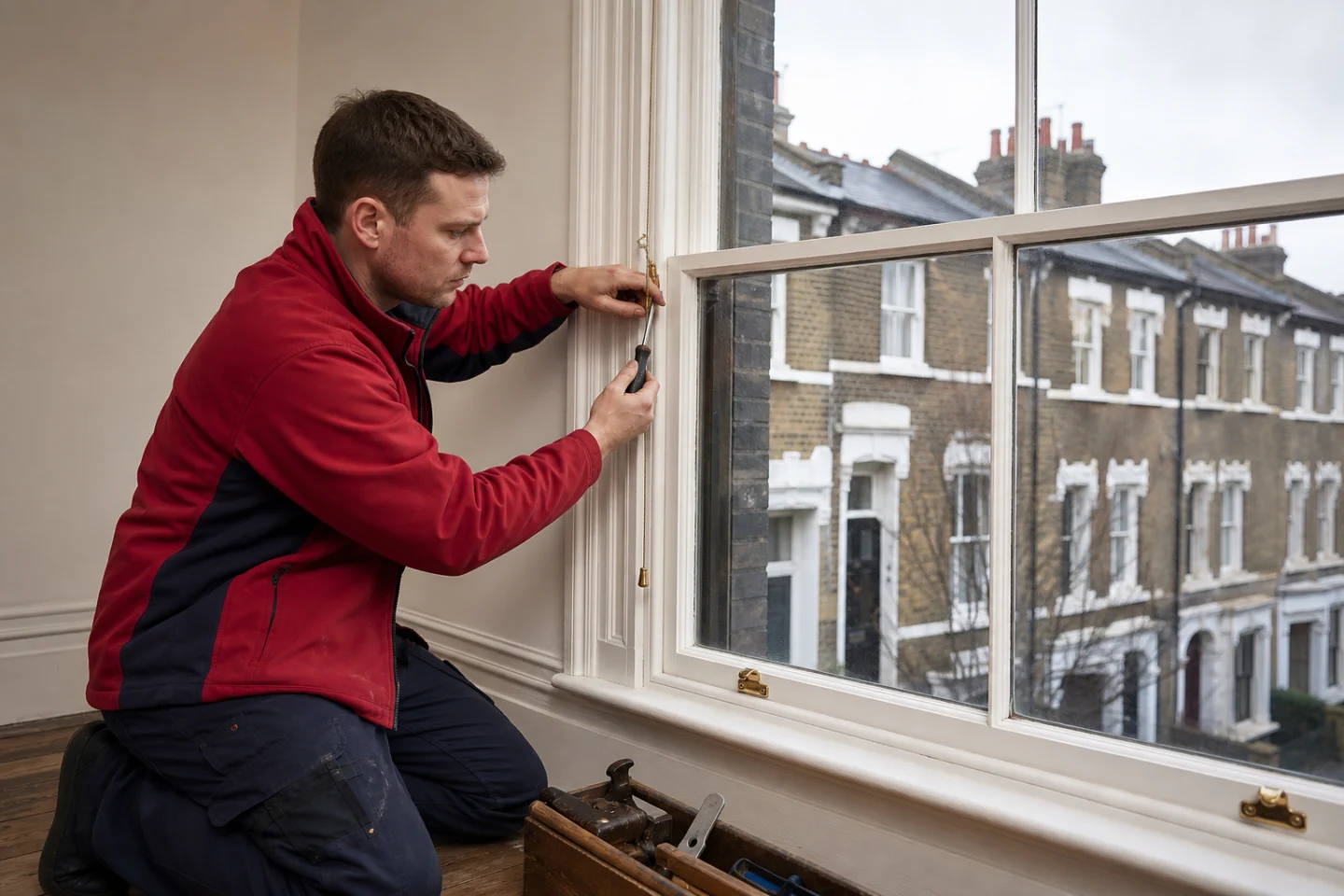
Broken sash cords are a classic London terrace fault. When a cord snaps, the sash can drop hard, jam, or become unsafe to use. Cord replacement restores balance when the timber box, pulleys and sash are still serviceable.
We open the pocket, renew cords with suitable rope, check pulley free-running, rehang and test travel. If beads are painted solid or weights are missing, that becomes part of the same conversation.
A full overhaul may be better when multiple sashes fail, paint has sealed everything shut, or timber is decayed. Cord-only work is ideal when the rest of the window is sound.
Users searching for this issue want immediate clarity: is it urgent, what can they check safely, and who should attend. This page answers those questions for Greater London homes and rentals without unsafe DIY instructions or remote definitive diagnosis claims. Photos and a full postcode remain the fastest way to turn a symptom description into a written estimate with stated assumptions.
Safety first — what not to do
Do not force stuck sashes until glass breaks. Do not ignore active water near electrics. Do not assume bleach on mould is a permanent fix while moisture continues. Do not plane a certified fire door without understanding compliance limits. If you smell gas, use the national gas emergency service — not a general repairer.
Safe checks: photograph the fault, note when it worsens, stop using a leaking fitting if you can isolate it safely, keep people away from loose overhead material, and avoid standing on unstable furniture to poke ceilings. Temporary towels and bowls manage drips; they do not replace source control or fabric repair.
Likely causes (not a remote diagnosis)
Several causes can look similar in photos. Water marks may be old and dry or still active. Cracks may be finish movement or something that needs further assessment. Door binding may be hinges, strike plates, carpet rise or seasonal swell. Failed silicone may be product age or a moving tray. We use photos to triage and site inspection when needed — we do not invent certainty from a single blurry image.
If two contractors give very different diagnoses from the same photos, compare what each assumes about moisture status, structural concern, matching materials and decoration extent. Assumptions drive price more than hourly rates alone.
How diagnosis and repair usually run
Inspect operation: Confirm cords, pulleys, weights and bead condition.
Open pocket carefully: Protect interior finishes while accessing the weight box.
Renew cords and rehang: Correct length and balance for smooth travel.
Test and tidy: Check catches, travel and leave beads secure.
Related trades and service boundaries
This problem often links to a parent service on this site (sash-window-repair). Gas work, notifiable electrical work and structural engineering stay with appropriate specialists. We complete fabric repairs, making-good, joinery adjustments and finishing within scope and flag the rest early so programmes do not stall mid-job.
When multiple trades must attend, sequence matters: stop water before permanent ceiling finish; repair substrates before decoration; free sashes before draught-proof systems; confirm fire-door rules before alteration. We coordinate surrounding works when asked and keep exclusions explicit in writing.
Cost factors without invented fixed prices
Access, parking, floor level, matching finishes, drying time, hidden defects, occupied versus void status, and building management rules change cost. Guide rows on this page are orientation for Greater London only. Your written estimate is specific to photos and postcode.
Ask every quote what is included for protection, waste, materials, decoration and revisit if drying is required. The cheapest headline often assumes the easiest answers to those questions. Variation control matters: if site conditions differ from photos, we pause for approval rather than inventing open-ended day rates without communication.
Repair versus replace decisions
Repair-first is usually cheaper and more conservation-friendly for period fabric. Replacement enters when decay, distortion, safety rules or failed systems make repair uneconomic or non-compliant. We explain the fork rather than forcing one product path.
For rentals, proportionate repair protects both cashflow and re-let quality. For owner-occupiers, repair can buy years while you plan larger works. For agents, clear repair-versus-replace notes help landlords decide without endless email chains.
Prevention and aftercare
After works, follow cure and drying guidance, monitor for returning symptoms, and schedule seasonal checks where external water management or timber decoration matters. Prevention is habit and maintenance, not a miracle coating claim. Keep completion notes and photos with the property file — especially for insurance, deposits and future sales.
Ventilation, gutter clearing, prompt silicone maintenance, and not ignoring the first soft spot on a sill all reduce repeat call-outs. We leave practical aftercare notes rather than lifetime promises that ignore weather and use.
Landlords, agents and property managers
Share approver identity, keys, parking, entry codes and evidence needs before attendance. Documented repairs help owners; they are not legal deposit rulings. Numbered lists beat “make good throughout”. Photo packs reduce “why did this cost that?” conversations.
Occupied tenancies need notice and protection. Voids need secure key handling and programme realism against re-let dates. Multi-unit managers benefit from batching similar faults by area across Greater London to cut abortive travel.
Illustrative methodology scenario (not a verified case study)
A typical Greater London enquiry matches this symptom class for Sash Cord Replacement London. Photos and postcode produce a written scope with stated assumptions. Attendance confirms substrate conditions. Works complete with protection, tidy close-out and notes on any residual risks. This is method illustration only — not a client-named case study with rights-cleared photography or star ratings. A public verified evidence pack may be added later; until then we prefer honest methodology over invented testimonials.
What to send when you enquire
Wide and close photos, full postcode, floor level, parking and entry notes, whether water is still active (if relevant), whether the home is occupied or void, and whether you are owner, landlord, agent or manager. For lists, number items. For doors and windows, show the full opening and the binding or failure point. For ceilings and floors, show the wider room context.
The better the intake pack, the fewer abortive visits and mid-job surprises. Written estimates follow from that pack; remote definitive diagnosis does not.
Quality standards we work to
Written scope before significant works where practical. Protection in occupied homes. Tidy close-out. Honest variations if substrates differ from photos. Clear exclusions for regulated trades. No painting over active leaks as a completed repair. No forcing historic fabric past what it can take. No compromising fire-door certification for cosmetic convenience.
If something is outside our scope, we say so early. If a cheaper temporary make-safe is wiser than permanent finish today, we explain why. That tone is deliberate: London repair markets are full of vague day rates and disappearing subcontractors. Clarity is the product as much as the craft.
Further practical guidance on Sash Cord Replacement London
People often delay this issue until decoration fails, water reaches a neighbour, security is compromised, or a tenancy checkout turns a small fault into a long list. Earlier photos usually reduce scope. If two contractors quote very different numbers, compare inclusions for protection, making-good and decoration — not headlines alone.
London stock varies: terraces, conversions, mansion blocks and newer flats change access more than they change basic craft principles. Tell us which you have. Parking restrictions, concierge rules, and narrow staircases with no lift change labour time even when the fault itself is simple. We price the real attendance, not a rural ideal.
When to escalate urgently
Active uncontrolled water, insecure entrance doors, loose overhead finishes, and unsafe glazing need priority triage. Cosmetic stages wait. We confirm earliest suitable slots rather than inventing universal same-hour guarantees that collapse under London traffic and access reality.
If anyone is at immediate risk, make the area safe, contact emergency services where appropriate, and then document for repair attendance. For gas concerns use the national emergency line. For electrical sparking or flooding near electrics, isolate if safe and seek appropriate emergency help.
Comparing quotes without getting lost
Line up scope, not just total price. Does the quote include materials? Decoration? Waste? Parking? Revisit after drying? Matching limits? Fire-door caveats? Who is the named attending firm? Written assumptions beat verbal “it’ll be fine”.
We would rather lose a job on a clear higher scope than win on a fantasy low number that becomes a dispute on day two. If budget is tight, ask us to prioritise the safety and moisture items first and phase cosmetics — that is a valid plan when stated in writing.
Occupied homes, flats and building rules
Protection of floors and furniture is not optional politeness; it is how you avoid secondary claims. Noise and dust windows may be limited by leases. Waste must not block common parts. Lift bookings and loading bays sometimes need notice. Share building contacts early.
In conversions, neighbours may be affected by leak paths or noisy works. Factual notes help agents more than speculative blame. We reinstate your finishes; we cannot force access to another demise without proper arrangements.
When cords alone restore a sash
Broken sash cords are classic London terrace faults. A snapped cord can drop a sash hard, jam the opposite cord, or leave a window unsafe. Cord replacement restores balance when the timber box, pulleys, weights and sash are still serviceable. It is not the same job as a full draught-proof overhaul, painted-shut release, or sill rebuild — though those may appear on the same window.
We open the pocket carefully, protect interior finishes, renew suitable cord or chain as agreed, check pulley free-running, rehang and test travel. Missing weights, seized pulleys, or cracked staff beads change the scope mid-job if photos did not show them. Upper-floor access, external work restrictions and painted-solid beads affect programme and may need scaffolding or tower discussion separately.
Cord, chain, balance and safety
Correct length and knotting (or chain termination) matter for smooth travel and safe holding. Uneven travel after a snap often means the opposite side needs attention too — replacing only the broken side can leave a window that still feels wrong. Catches, fasteners and parting beads should be checked so the sash closes and secures.
Conservation-minded owners usually prefer repair of existing boxes over full PVC replacement. Where timber is decayed or boxes are distorted beyond practical repair, we say so rather than selling endless cord visits on a failing frame. Multiple sashes failing across a façade often point to a phased overhaul rather than one-off emergency cords forever.
What to photograph before we quote
Show the full window from inside, the cords if visible, any broken ends, the exterior elevation, floor level, and whether the sash currently stays open, drops, or is fixed shut for safety. Note if children use the room, if the window is a secondary means of escape discussion for the household, and any building rules on external works. Written estimates separate cord work from wider joinery so you approve the real job.