Productive handyman visits for London homes and rentals: prioritised snag lists, careful fixing, and clear boundaries when a specialist trade is required.
Snags, fixes & multi-item lists
Handyman services in London
A good London handyman visit is defined less by the hourly rate and more by the brief. A numbered photo list, access notes and a clear priority order turn a scattered set of annoyances into a single productive attendance. Without that, people book three call-outs for work that should have been one half-day, or they hire the wrong trade for a job that needed diagnosis rather than a quick screw.
Typically 1–6 hours for defined lists; larger voids may need a longer package
Greater London
Written scope after photos/postcode review or visit
London Home Repairs provides handyman services across Greater London for homeowners, landlords and agents who need practical fixes: doors that stick, shelves that need proper fixings, silicone that has failed, minor carpentry adjustments, mounting where the wall type allows, and the mixed snag lists that appear at checkout or after a tenancy.
This page explains what belongs on a handyman list, what should go to a specialist, how we price and sequence multi-item visits, and how occupied homes and rental access change the day. It is written to help you brief the work properly — not to claim that one person can legally and safely do every trade in a London property.
What a handyman should handle — and what they should refuse
Handyman work is competent general repair and installation of non-regulated tasks: adjusting and rehanging ordinary doors, fitting shelves with suitable wall fixings, sealing wet-room junctions when the substrate is sound, basic carpentry trims, furniture assembly, minor making-good, and snagging lists that mix several small items.
A responsible handyman also knows the stop lines. Gas appliances and gas pipework need Gas Safe engineers. Notifiable electrical work needs a suitably qualified electrician. Structural alterations need proper design. Complex roof work at height needs safe access planning. Fire doors have rules about how much can be altered. Saying “no” to the wrong item is part of the service, because the alternative is unsafe or uninsured work dressed up as a bargain.
When a list mixes handyman tasks with specialist tasks, we will split it honestly: complete what belongs here, and flag what needs another trade so you are not left with a half-finished property and a false sense of completion.
Why London snag lists grow so quickly
In rented stock, checkout reports and inventory clerks generate long lists of small defects that none of which alone feels worth a contractor day rate — until they stack. In owner-occupied homes, the same pattern appears as a mental backlog: the door that has rubbed for months, the loose banister cap, the silicone that blackened last winter, the mirror that never got mounted, the cupboard catch that finally failed.
London flats add constraints that pure “handyman apps” often underprice: parking, floor level, concierge windows, and the time cost of moving materials through common parts. That is why a cheap headline hour can become an expensive second visit. Bundling is the usual cure: one mobilisation, one protection setup, one tidy-down.
Period properties add another twist. Soft brick, old plaster, and unknown wall build-ups punish lazy fixings. A shelf that holds in modern plasterboard may fail in friable historic plaster if the fixing method is wrong. We choose anchors for the substrate we find, not for the substrate the packaging photograph assumed.
How to brief a handyman visit that actually finishes
Start with a numbered list. For each item, add one or two photos and a note of priority: safety, function, or cosmetic. Mark whether the home will be occupied. Mention pets, parking, and entry arrangements. If an agent holds keys, say who confirms access on the day.
Group related rooms. It is faster to complete all bathroom seals and then move to doors than to zigzag through the property three times. If something must be bought first — a specific handle, a matching tile — say whether you will supply it or want us to source it.
Avoid the brief that says only “make good throughout.” That is not a scope; it is an invitation to dispute. A handyman visit thrives on specificity. Where you cannot specify, say so — we will inspect and convert uncertainty into a written list before large spend.
Doors, ironmongery and the most common call-outs
Doors that will not close cleanly dominate handyman diaries. Often the fix is hinge packing, strike plate realignment, or light easing of a high spot — not a new door. Entrance doors that fail to latch are security issues and should be prioritised. Internal doors that rub seasonally may need a measured ease rather than aggressive planing that ruins margins in winter when timber shrinks again.
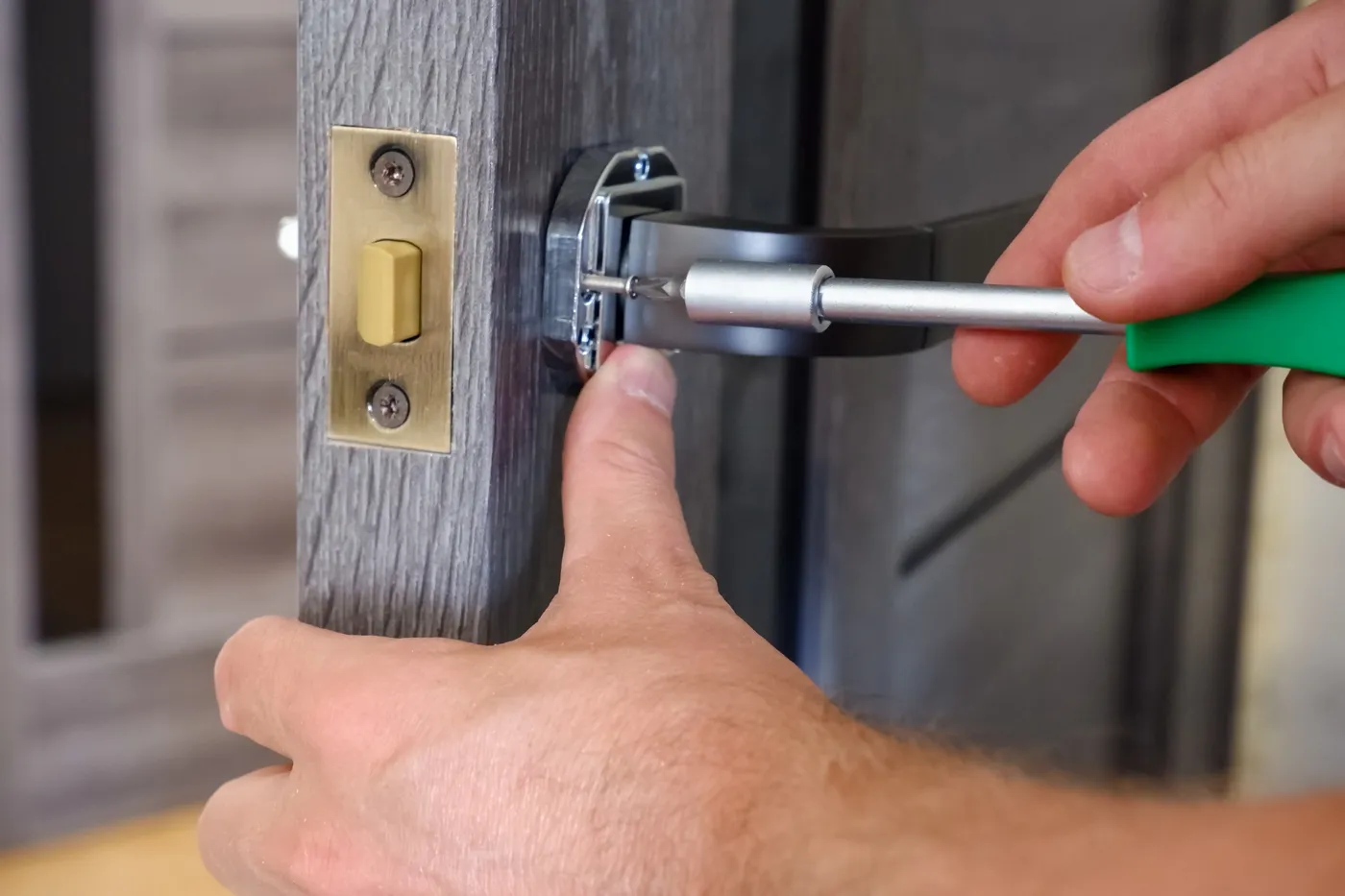
Ironmongery failures — latches, handles, stops, closet catches — are classic list fillers that bundle well with other rooms. We replace like-for-like where you supply ironmongery, or source standard patterns when you want us to. Bespoke or heritage ironmongery may need longer lead times.
Fire doors are different. If a doorset is certified, alteration limits apply. We will not plane a fire door like a cheap hollow core door to “make it work.” If the right answer is a specialist fire-door contractor, we will say so.
Mounting, fixings and walls that are not what they seem
Mounting TVs, mirrors, radiators covers, blinds brackets and shelving looks simple until the wall is lathe, crumbling plaster, tiled wet-room substrate, or a void that needs proper finding. We check for obvious services where practical, use suitable fixings, and will refuse a mount that is unsafe for the wall type or the weight of the object.
If you need something mounted on a feature wall with unknown construction, expect investigation time. That is cheaper than a failed fix and a damaged surface. Where possible, tell us the approximate weight of the object and whether you still have manufacturer brackets.
We are not an AV design service. Cable management can be neat surface routing or simple concealment; chasing cables into walls is a different scope with dust, making-good and sometimes electrical competence boundaries.
Sealing, silicone and small wet-room rescues
Failed bathroom silicone is one of the highest-value small jobs in London flats because water tracking damages ceilings below. A proper reseal means removing contaminated material, cleaning the joint, drying it, and applying the right sanitary product — not wiping bleach on mould and calling it done.
If tiles are hollow or the tray has moved, sealing alone will not last. That is where a handyman visit becomes a diagnosis visit: we can reseal sound junctions and tell you when tiling or a wider bathroom repair is required. Honesty here saves you from paying twice for the same leak path.
Kitchen seals, utility rooms and shower screens follow the same logic. Preparation time is most of the job; the neat bead is the visible minority.
Carpentry-light tasks versus full joinery
Handyman carpentry covers trims, small repairs, shelving carcass tweaks, door furniture, and minor boxing adjustments. It does not automatically include bespoke fitted furniture design, staircase reconstruction, or complex sash overhauls — those sit with joinery or specialist window repair pages on this site.
Knowing the difference protects budgets. A loose newel cap or a split architrave length is a handyman-scale item. A rotten sash sill across an elevation is not. We will complete what fits the visit and redirect what needs a different skill set, with links to the relevant service pages so you are not abandoned mid-problem.
Rental handyman work: agents, tenants and evidence
Letting agents need speed of communication more than heroic claims. Who approves spend? Who holds keys? Is the tenant present? Which items are landlord responsibility versus tenant damage? We work to the list you provide and can photograph completed items when you need a paper trail for owners or systems.
We do not adjudicate deposit disputes or give legal advice. We do document what we repaired. That distinction matters: useful evidence is not the same as a tribunal outcome.
For voids, handyman lists often sit beside decoration. Sequencing matters — complete dusty fixing before final paint where possible. If you need a combined void package, say so; the end-of-tenancy and landlord maintenance pages cover wider programmes while this page focuses on the handyman layer.
Time, parking and why “quick jobs” still need logistics
Even a two-hour handyman list in Zone 2 can burn half the day if parking is impossible and materials are wrong. We plan attendance around access reality. If your building only allows works in certain hours, put that in the brief.
Minimum visit pricing exists because mobilisation has a cost: travel, parking, tool setup, protection, and tidy-down. Bundling items is how you convert that mobilisation into value. One well-briefed visit almost always beats three “cheap” micro-visits.
If a part must be ordered, we may complete everything else and return for the final fit — or pause the item until the part arrives. We will not invent parts on the van for every possible ironmongery pattern in London.
Safety, insurance boundaries and honest claims
We carry out work with appropriate public liability insurance for the tasks we accept. We do not claim specialist accreditations we cannot evidence. We do not promise injury-free DIY advice for tasks that should not be DIY. If a job is unsafe for the access available, we stop and re-plan rather than improvise at height without proper equipment.
You should also be cautious of cash-only offers with no written scope. A handyman visit still deserves a clear list of what will be done and what it costs. Written estimates protect both sides when the list is more than a five-minute favour.
How handyman pricing works in practice
Typical structures are a minimum visit covering the first productive period, then additional time for remaining items, or a fixed package for a defined list after photos. Materials may be included for consumables and charged for substantial supply items — the estimate should say which.
Guide ranges on this page are orientation for Greater London. They are not a promise that every postcode and every parking condition matches the same band. Complex access, failed previous fixes, and unknown wall types add time.
If you want cost control, reduce uncertainty in the brief. The more specific the list, the tighter the written estimate can be.
A representative multi-item visit (illustrative, not a verified case study)
A common pattern: a two-bed rental void with a checkout list of fourteen items — three doors rubbing, failed bathroom silicone, two loose shelf units, a missing door stop, a toilet seat replacement supplied by the agent, and minor filler holes in the hallway. We confirm access, complete sealing and door geometry first, fit supplied ironmongery, fix shelving with appropriate anchors, and photograph completed groups for the agent pack. Cosmetic decoration of filled holes may be a separate painter line if the voids programme includes full repaint.
This scenario is illustrative of method and sequencing. It is not a published, client-permitted case study with rights-cleared before/after photography. Until real projects are evidenced for public use, we will not present stock imagery as proof of a named job.
After the visit: what you should check
Operate every door and latch that was adjusted. Check seals for continuous contact after cure time guidance. Load shelves gradually if adhesive anchors need set time. If something feels wrong within the first days — a door that dropped again, a seal that opens — contact us with photos while the context is fresh.
Keep the written list and any photos with your property file. Future tenancies and future trades benefit from knowing what was already addressed.
Problems we solve
- Mixed snag lists that are too small for separate specialist call-outs
- Doors that rub, stick, or fail to latch cleanly
- Failed sanitary silicone and simple wet-room reseals on sound substrates
- Shelving and mounting with fixings matched to the wall type
- Minor carpentry trims, catches, stops and ironmongery swaps
- Checkout and void handyman items for rentals
- Furniture assembly and practical household fixes within competence
- First-pass diagnosis that splits handyman work from specialist trades
Warning signs
- Entrance door that will not lock or latch reliably
- Water tracking from failed seals into floors or ceilings below
- Loose handrails or safety-related fittings
- Mounts on unknown walls carrying heavy objects without proper anchors
- Repeated failure of the same fix — substrate may be wrong for the method
What is included
- Review of a prioritised photo list before attendance where practical
- Written scope or clear package pricing for the agreed items
- Tools and standard consumables for accepted tasks
- Suitable fixings chosen for the substrate found on site
- Protection and tidy working in occupied homes
- Completion of listed items within the agreed time or package
- Flagging of items that need a specialist instead of forcing them
- Optional photo notes of completed work for agents or owners
What is not included
- Gas work and Gas Safe tasks
- Notifiable electrical installation
- Structural alterations and engineered works
- Full sash overhauls and major joinery projects (see specialist pages)
- Fire-door alterations beyond what certification allows
- Guaranteed same-hour citywide attendance without written confirmation
- Legal advice on tenancy or deposit disputes
Guide prices
Guide ranges for Greater London orientation only — not fixed quotes. Parking, access, wall types, materials and list complexity change the figure. A written scope for your list is the commercial basis of the visit.
Minimum handyman visit
£95–£160Covers mobilisation and first productive period; postcode/access dependent
Additional hour on the same visit
£45–£75Used when the list runs longer than the minimum window
Snag list package (about 2–3 hours)
£180–£360Defined multi-item list after photos
Door adjustment / rehang (typical internal)
£90–£300Geometry-dependent; ironmongery supply extra if needed
Bathroom silicone refresh (typical)
£160–£360Assumes sound tiles/tray; wider failures quoted separately
Mounting / shelving (per typical item)
£70–£160Wall type and weight change fixings and time
What changes the price
- Length and clarity of the item list
- Parking and building access time cost
- Whether parts are supplied or must be sourced
- Occupied home versus empty void
- Unknown wall substrates needing investigation
- Return visit risk if parts are unavailable same day
How the work runs
- 01List intake
Numbered items with photos and priorities. Safety and water issues rise to the top.
- 02Scope split
We mark handyman-fit items versus specialist referrals so expectations stay honest.
- 03Attendance
Protection where needed, efficient room order, correct fixings, tidy finish.
- 04Close-out
Operate adjusted doors/latches with you or your agent when present; note any deferred parts.
Property types
- Flats and conversion stock with tight access
- Terraced houses with mixed internal snags
- Rental voids and occupied tenancies
- Managed blocks with entry and hour constraints
Materials and methods
- Fixings selected for masonry, board, or uncertain historic substrates as found
- Sanitary silicone only after full removal of failed contaminated beads
- Door geometry correction preferred before aggressive planing
- Occupied-home manners: dust control, protection, clean exit
Aftercare
- Respect silicone cure times before showering or heavy water use
- Do not overload new shelf fixings immediately if adhesive systems need set time
- Report early if a door drops again — photos help a quick remote check
- Keep the completed list with your property file for the next tenancy or sale
London coverage
Handyman Services in CamdenHandyman Services in IslingtonHandyman Services in HackneyHandyman Services in WestminsterHandyman Services in Kensington & ChelseaHandyman Services in Hammersmith & FulhamHandyman Services in WandsworthHandyman Services in LambethHandyman Services in SouthwarkHandyman Services in Tower HamletsHandyman Services in EalingHandyman Services in Barnet
Frequently asked questions
How much does a handyman cost in London?
Many visits use a minimum call-out covering the first productive period, then additional time. Guide ranges on this page are orientation only. A written scope for your photo list is the real price basis.
Can one visit clear my whole snag list?
Often yes if the list is mostly handyman-scale and parts are available. Specialist items are split out rather than forced into the wrong trade.
Do you work in occupied flats?
Yes. Protection, parking and access notes matter. Tell us about concierge rules and quiet hours.
Will you mount my TV?
Where the wall type and weight are suitable and fixings can be made safe. We refuse mounts that are unsafe for the substrate.
Can you reseal a shower?
Yes when tiles and tray are sound. Hollow tiles or movement need a wider repair conversation.
Do you handle gas or electrical faults?
No as handyman work. Those require appropriately qualified specialists. We will flag them on your list.
Do you work for letting agents?
Yes. Share who approves spend, key arrangements and whether photo evidence is required for the owner pack.
What if a part is not available on the day?
We complete other items and either source the part for a return fit or pause that line until you supply it — agreed in the scope.
Is there a minimum charge?
Usually yes, because mobilisation has a real cost in London. Bundling items is how you get value from that minimum.
Can you guarantee same-day attendance?
We prioritise urgent security or water-related items where practical and confirm the earliest suitable slot. Universal same-day guarantees are not claimed.
Next step
Need handyman services?
Share photos and your postcode. We will confirm fit, access and a written estimate.