Repair-first timber sash work for London period homes: cords, balance, easing, beads and sill repairs that keep original windows working.
Period windows, practical repairs
Sash window repair in London
Timber sashes are part of London’s street character and, when maintained, a sensible alternative to wholesale replacement. Broken cords, painted-shut leaves, rattling beads and decaying sills are repair problems first. Replacement is a different conversation — sometimes necessary, often not the first honest step.
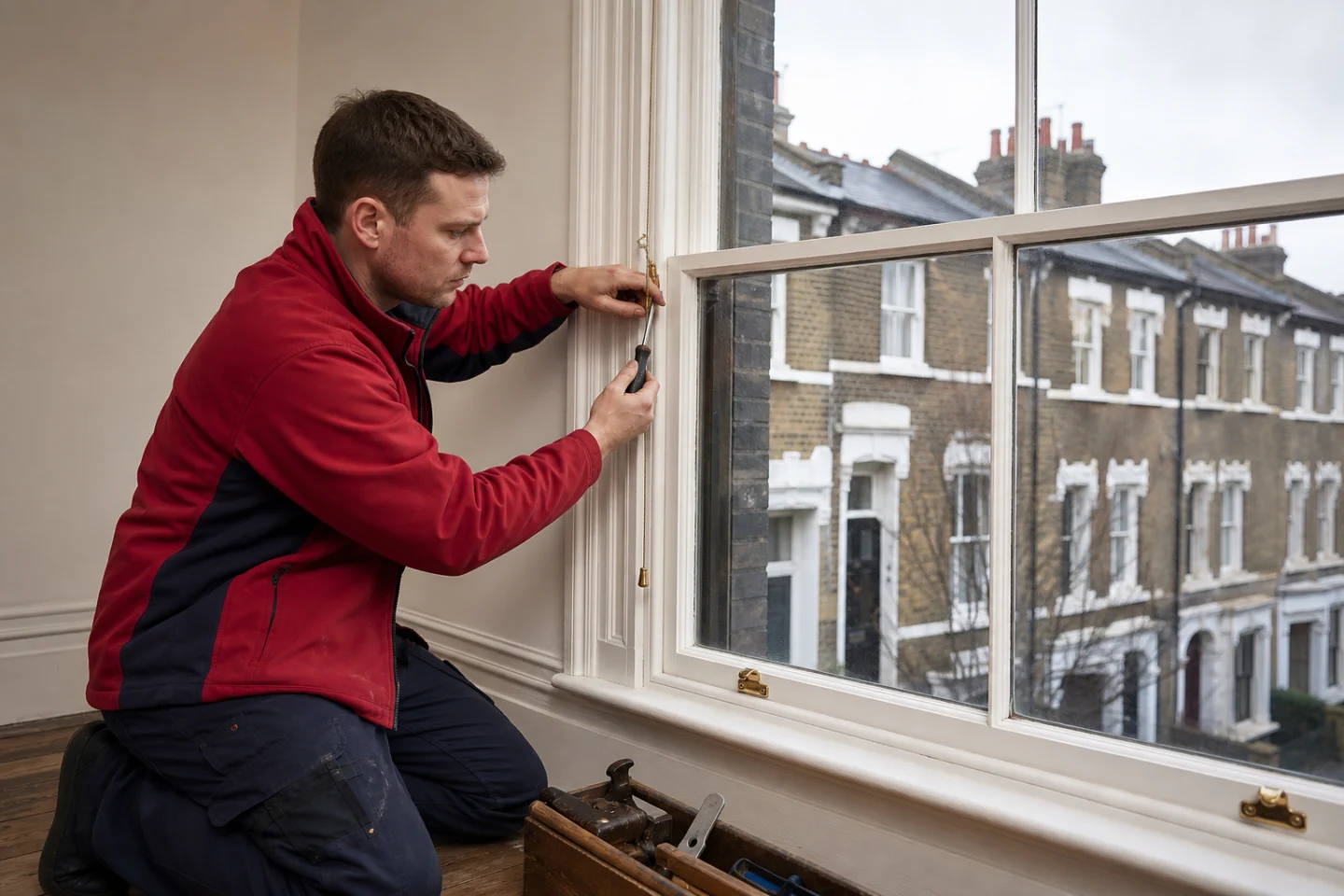
From a few hours per sash for cords to multiple days for multi-window overhauls
Greater London
Written scope after photos/postcode review or visit
London Home Repairs handles sash window repair across Greater London with a repair-first mindset: restore operation and weather performance where the boxes and timber remain serviceable, and say clearly when decay or distortion makes replacement the better long-term discussion.
This page covers common faults, conservation-aware thinking, how overhauls differ from cord-only jobs, and what access (especially upper floors) does to price and programme. It is not a planning consultancy, but we will flag when appearance-changing replacements may need extra checks.
If your priority is heritage appearance, say so. If your priority is maximum thermal performance, say so. Those goals lead to different scopes, and conflating them is how people end up disappointed with a perfectly competent repair that never claimed to be a replacement product.
Why repair is often the right first move
Original sashes match the proportions of period elevations. In conservation areas and on character streets, keeping them usually supports both aesthetics and planning common sense. Repair also avoids the cost and disruption of full frame replacement when cords, pulleys, paint build-up or local sill decay are the real issues.
Repair is not denial. Severely rotten boxes, distorted frames, or failed units beyond economical revival should be named as such. The goal is the right decision, not a forced product.
Broken sash cords and balance problems
When a cord snaps, the sash can drop hard or refuse to stay open. Cord replacement restores balance when weights, pulleys and timber are sound. We open pockets carefully, renew cords with suitable materials, check pulley free-running, rehang and test travel.
If multiple sashes fail together, or paint has locked the whole window, a wider overhaul may be more efficient than repeated single-cord visits.
Painted-shut sashes
Decades of paint can seal sashes immoveable. Forcing them risks broken glass and destroyed beads. Methodical cutting of paint lines, freeing beads, easing binding faces and restoring travel is the correct approach. Some local paint disturbance is normal; high-spec finishes may need a decorator touch-up afterwards.
Rattles, draughts and comfort
Rattling often comes from worn beads, slack cords or seasonal movement. Draughts are real in old sashes, but sealing them permanently shut creates other problems. Discreet draught-proofing and correct bead adjustment can improve comfort while keeping the window operable — important for ventilation and, in some layouts, means of escape considerations you should not casually remove.
Sills, bottoms and weather edges
Rotten sill noses are moisture paths into the wall. Local splices or fuller sill renewals restore the weather edge. Filler over soft timber is a short-lived cosmetic. Probe beyond the paint blister before promising a cheap “sill repair”.
Upper floors and access
Many London sashes sit above hard-to-reach elevations. Internal working is often preferred for cord and bead work, but external sill and paint conditions may need external access. Towers or scaffold, when required, dominate cost. We price access honestly rather than discovering it mid-job.
Conservation areas and listed buildings
Like-for-like repair of existing sashes is commonly the path of least resistance. Changing materials, proportions or external appearance can engage planning or listed-building constraints. We repair; we do not file planning applications as a default service. If your project needs formal consent advice, involve the right professional early.
Repair versus replacement decision factors
Repair favours sound boxes, repairable rails, and clients who value original fabric. Replacement enters when decay is structural to the frame, distortion prevents reliable operation, or thermal upgrade strategies require a different product — always with eyes open to cost, lead times and consent.
Illustrative overhaul scenario (not a verified case study)
A first-floor Victorian sash will not stay open; cords are frayed and staff beads are thick with paint. We free the sash, renew cords, ease travel, and leave the window operable for ventilation. Decoration of disturbed beads is noted as optional follow-on. This is method illustration only.
Aftercare for timber sashes
Operate sashes periodically so paint does not reseal them. Maintain external paint films. Clear weep paths where present. Address failed external seals before internal stains appear. Seasonal stickiness can return with humidity — light easing is sometimes normal maintenance, not failure of the last repair.
Anatomy of a working timber sash
A sliding sash relies on balanced weight, free-running pulleys, cords or chains in good condition, staff and parting beads that guide without binding, and timber that is still dimensionally stable enough to travel. Fail one element and the window becomes dangerous or unusable. Understanding that system is why random planing or forcing is the wrong first move.
Pocket access allows cord work without destroying the whole frame. Careful bead removal preserves profiles that are expensive to recreate. Good repairers think in systems, not in isolated symptoms.
Glass, putty and secondary issues
Cracked glass and failed putty lines often appear alongside mechanical faults. Replacing a single pane may be straightforward; historic glass and complex glazing patterns need care and may involve longer lead times. We will not casually destroy salvageable glass to speed a cord job.
If glazing is the primary problem, say so in the brief so the estimate includes the right trades and materials.
Noise, security and modern expectations
Period sashes were not designed to modern acoustic or security marketing standards. Repair improves operation and can reduce rattle; it does not turn a Victorian sash into a certified modern security window. Secondary glazing or specialist products are separate strategies with their own costs and consents.
Be honest about goals: operation and weather performance first; acoustic transformation is a different project class.
Multi-window programmes for whole elevations
Terraces often need several windows addressed together. Batching saves repeated access setups and produces a more consistent result across an elevation. We can programme room-by-room to keep homes occupied, or tackle elevations more aggressively when scaffolding is already required for external works.
Ask for a window-by-window schedule rather than a single vague “do the sashes” lump sum.
Decorating interfaces
Mechanical repair and decoration are friends that should not trip over each other. Fresh paint before cords are fixed can seal sashes again. Cords fixed without any paint plan can leave scarred beads. Agree the sequence: free and repair, then decorate — or decorate with the knowledge that some mechanical disturbance may follow if the order is reversed.
Weights, pockets and what “balanced” really means
A sash that flies up or crashes down is poorly balanced. Weights must match the leaf. Missing weights, broken chains, or pocket debris all show up as bad travel. Opening pockets carefully avoids splintering staff beads that define the window’s look.
If previous DIY used nails, screws or expanding foam in the wrong places, recovery takes longer. Share any history of prior “fixes” so the estimate can include extra rectification time rather than assuming a clean original pocket.
Staff beads, parting beads and profiles worth keeping
Beads are not scrap timber. Many period profiles are awkward to match from modern stock. We remove and refit carefully where reuse is possible. Where beads are destroyed by rot or brute force, replacement profiles may be approximate rather than museum-perfect unless you commission purpose-run mouldings.
Tell us if bead appearance is critical to a heritage interior so we do not treat them as disposable.
Seasonal movement and expectations after repair
Timber moves with humidity. A sash eased in damp winter weather may run looser in summer; one repaired in dry heat may tighten later. Competent repair reduces extreme binding; it does not freeze wood in a single climate state forever.
If a window binds again after extreme weather, a minor re-ease can be normal maintenance rather than proof the original repair failed.
Problems we solve
- Broken or frayed sash cords
- Sashes that will not stay open or travel smoothly
- Painted-shut leaves and stuck beads
- Rattling and excessive movement in wind
- Local timber decay at sills and bottom rails where repairable
- Draught-aware adjustments without illegal permanent sealing shut
Warning signs
- Sudden sash drop suggesting cord failure
- Soft timber at sill noses or meeting rails
- Glass stress from forced opening of stuck sashes
- Persistent water staining under the window internally
What is included
- Inspection of operation, cords, pulleys, beads and visible timber condition
- Written scope for cord-only, ease, or wider overhaul packages
- Cord renewal and rehang where scoped
- Easing and bead work as agreed
- Local sill timber repairs when included
- Clean-down of the work area and operation test
- Assumptions stated in writing before attendance where practical
- Variation control if site conditions differ from photos
What is not included
- Full window replacement manufacture and install as a default line
- Planning or listed-building consent applications
- Secondary glazing design packages unless separately quoted
- Scaffold design for complex elevations without access quote
- Guaranteed identical paint finish without decoration scope
Guide prices
Guide ranges for Greater London orientation. Upper-floor access, scaffold, decay extent and decoration change the written estimate. Not fixed quotes.
Cord replacement (per sash)
£120–£220Standard internal access assumptions
Pair of sashes (one window) cords
£220–£400Ease and free painted-shut sash
£140–£280Per sash typical
Full overhaul (per window)
£280–£650Condition and parts dependent
Local sill timber repair
£180–£520Decay extent varies
What changes the price
- Number of sashes and condition of cords/pulleys
- Paint build-up and ease time
- Sill decay extent
- Floor level and external access needs
- Whether decoration of disturbed finishes is included
How the work runs
- 01Survey
Operation test, visible timber, beads, cords, and access constraints.
- 02Written scope
Which sashes, which operations, and access assumptions.
- 03Repair
Pocket work, cords, ease, sill repairs as agreed.
- 04Test and handover
Smooth travel, safe holding, and aftercare notes.
Property types
- Victorian and Edwardian terraces
- Conservation-area street properties
- Period conversions retaining original sashes
- Selected later properties with timber sliding sashes
Materials and methods
- Suitable cord or chain systems as agreed for the sash type
- Careful bead management to avoid unnecessary destruction of profiles
- Timber repairs to sound wood rather than filler on rot
- Operation testing under controlled open/close cycles
- Methods chosen for durability in occupied London homes, not speed alone
- Clean-down expectations agreed for shared buildings when relevant
Aftercare
- Operate sashes periodically
- Maintain external paint protection
- Do not force stuck sashes — call before breaking glass
- Report new water ingress early
London coverage
Sash Window Repair in CamdenSash Window Repair in IslingtonSash Window Repair in HackneySash Window Repair in WestminsterSash Window Repair in Kensington & ChelseaSash Window Repair in Hammersmith & FulhamSash Window Repair in WandsworthSash Window Repair in LambethSash Window Repair in SouthwarkSash Window Repair in Tower HamletsSash Window Repair in EalingSash Window Repair in Barnet
Frequently asked questions
How much does sash cord replacement cost in London?
Per-sash guide ranges appear above. Access and associated ease work change the total. Written estimates follow photos or inspection.
Can you repair sashes in a conservation area?
Yes — repair of existing timber sashes is commonly appropriate. Appearance-changing replacements may need extra checks beyond a repair visit.
My sash is painted shut — can it be freed?
Usually, with careful methods. Some disturbance to paint is expected; severe decay may limit perfect operation.
Do you replace sashes with uPVC?
That is a different product decision. This page is timber sash repair-first. Replacement strategies need separate scoping and may involve consent issues.
Why does my sash rattle?
Wear, beads, cords and seasonal movement are common causes. Adjustment and repair often help without full replacement.
Can you improve draughts without sealing forever?
Discreet draught-proofing and correct adjustment can help while keeping the sash operable. Permanent sealing shut is not recommended as a comfort strategy.
Do you work on upper floors?
Yes, with access planning. External works may need towers or scaffold, which we price rather than ignore.
How long does an overhaul take?
A single window may be hours to a day depending on condition; multiple windows take longer. Parts and access drive the programme.
Will you redecorate after repairs?
When included in the scope. Mechanical repair packages sometimes leave decoration as a follow-on line.
Is every rotten sill repairable?
Local decay often is. Extensive rot into the box or frame may push toward larger joinery or replacement discussions.
Can you match original glass?
We aim to respect existing glazing. Exact historic glass matching is not always available; we discuss options when panes must be replaced.
Do you install modern draught seals?
Where appropriate and agreed. Seals should not prevent safe operation. Product choice depends on the sash detailing.
Will repair stop all street noise?
No honest repair claim can promise modern acoustic performance from original single-glazed sashes alone.
Next step
Need sash window repair?
Share photos and your postcode. We will confirm fit, access and a written estimate.