Reinstatement after leaks in London homes and flats: remove failed finishes, repair substrates, and make rooms usable again once the source is controlled.
After the water stops
Leak damage repair in London
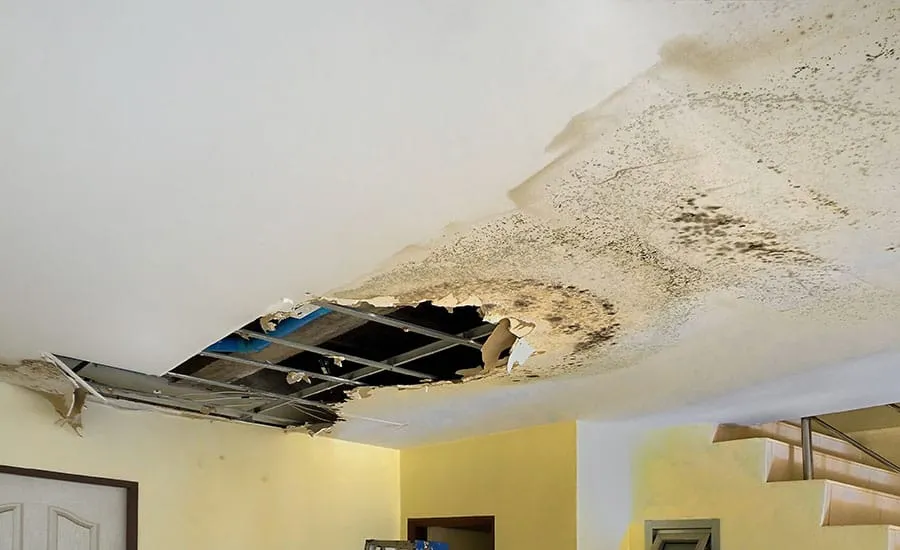
Leak damage repair is not the same job as finding a plumber. First the water must be stopped. Then the building fabric needs honest assessment: what is only stained, what is soft, what must be cut out, and what can safely be dried and finished. London Home Repairs focuses on that second stage — reinstatement and making good across Greater London houses and flats.
Make-safe may be quicker; permanent reinstatement often spans 1–10 days depending on drying and scope
Greater London
Written scope after photos/postcode review or visit
Stacked Victorian conversions make this especially common. A failed shower seal or overflow upstairs becomes a living-room ceiling stain downstairs. Mansion blocks add access rules. Owner-occupiers often want the room back without a full redecoration of the whole flat. Landlords need a clear scope they can approve and document.
This page explains the sequence from make-safe to permanent finish, what photos we need, how drying time affects programmes, and when a repair is the right answer versus a wider refit. We will not paint over active moisture and call it complete.
If you are comparing quotes, ask each contractor what they assume about source status, drying, decoration extent and access. The cheapest number often assumes the easiest answers to those questions — which is how callbacks begin.
Stop the source before you fall in love with the finish
Permanent cosmetic reinstatement over an active leak is wasted money. If water is still appearing after rain or after plumbing use, the priority is source control: plumbing, roof, gutter, or neighbour-side investigation. We can help with temporary protection and make-safe removal of dangerous loose material, but full reboard-and-decorate packages assume the source is controlled or clearly separated as someone else’s concurrent work.
If you are unsure whether the source is fixed, say so. A moisture-aware plan may include a pause between strip-out and decoration. That pause is not delay for its own sake; it is how you avoid paying twice for the same stain.
How we read ceiling and wall damage
Surface brown marks can be old and stable, or they can sit on soft board that will fail under light pressure. We look for softness, cracking around the stain, failed tape joints, blistering paint, and whether the damage spreads along a line (often a pipe or tray edge above).
Walls can show tide marks, blown plaster, or salt staining. Hollow plaster needs cutting back to solid edges. Painting over drumming plaster is a short-lived cosmetic trick, not a repair.
In flats, always consider the unit above and adjacent wet rooms. Inter-floor paths are normal in London stock; blame games help less than a practical reinstatement plan once water is stopped.
Make-safe versus permanent reinstatement
Make-safe work reduces immediate risk: removing loose material that could fall, protecting floors, and limiting further damage. Permanent reinstatement rebuilds the finish: board, jointing, plaster, stain-block, decoration, and joinery repairs where skirtings or frames were affected.
Clients sometimes want both on the same day. Sometimes that is possible for small, dry patches. Often it is not — especially when large wet areas need drying time. We will separate the phases in the estimate so you understand what you are booking.
The reinstatement sequence we follow
Protect the room. Cut out failed board or plaster to sound material. Check adjacent areas for hidden softness. Allow drying as required. Install new board or repair plaster backgrounds. Tape, joint and finish. Stain-block where tannin or residue could bleed. Decorate the agreed plane. Reinstate trims if included.
Skipping steps creates callbacks. The most common failure mode we see from previous work is emulsion applied over damp or unsealed residues, with the stain returning within weeks.
Floors, joinery and secondary damage
Water rarely respects one surface. Skirtings swell, engineered floors cup, laminate joints blow, and architraves stain. A ceiling package may need a related flooring or joinery line to leave the room coherent. We will not force unrelated full-room flooring renewals into a small ceiling job, but we will identify secondary damage that should be addressed before you redecorate around a swollen skirting.
Insurance, photos and documentation
We can photograph damage and completed works for your records. We do not act as loss adjusters, and we cannot guarantee an insurer will accept a particular scope or figure. If you are mid-claim, tell us what your insurer has authorised. Working inside an approved scope prevents disputes later.
For landlords and agents, photo packs help owners understand why a “small stain” became a board-and-skim package: softness is not always obvious in a single wide photo.
Access realities in London after a leak
Occupied homes need protection and clean working. Flats need consideration of neighbours and common parts when moving waste. If multiple trades are involved — plumber then repairer then decorator — sequencing and key holding must be planned. Abortive visits after a leak are common when access is unclear; confirm who will open the door on the day.
When leak damage becomes a larger project
Widespread soft ceilings, repeated leaks, contaminated insulation, or long-term unaddressed moisture can push a job beyond a local repair into a larger strip and rebuild. Black mould associated with chronic damp needs moisture diagnosis, not only cosmetic cleaning. We will recommend a wider scope when local patching would be dishonest.
Illustrative scenario (not a verified public case study)
A conversion flat has a one-metre brown stain beneath a bathroom. The leak above was repaired last week. Soft board is confirmed on site. We protect the room, cut out failed board, reboard and finish, stain-block, and repaint the ceiling plane for a uniform result. Secondary slightly swollen paint on the top of a skirting is lightly prepared and finished if included.
This is a method illustration, not a client-named case study with rights-cleared photography.
Aftercare once the room looks finished
Watch for returning marks over the following weeks. Maintain ventilation in wet rooms. Do not assume a new stain is “just paint flash” without checking. Keep your written scope and photos with the property file, especially for rentals and insurance records.
Related problems and services
If your primary symptom is a stained ceiling, also see our ceiling water damage problem page and plasterboard repair service. If silicone failure caused the leak path, bathroom repairs may be part of prevention. Property repairs covers mixed making-good lists that include leak damage among other faults.
Drying time is part of the repair, not an excuse
Water leaves ceilings and walls with elevated moisture even after surfaces look dry. Closing a ceiling too early traps moisture and invites mould or joint failure. Depending on volume of water, ventilation and season, drying may need hours or days. Dehumidifiers help in some sealed flats; opening windows helps in others. We will state drying assumptions in the estimate rather than promising an impossible same-day full cosmetic close on a soaked ceiling.
If you need the room usable quickly, temporary make-safe and protection can bridge to permanent works. That two-stage approach is often the honest programme after a serious leak.
Inter-floor politics without the drama
In conversions and blocks, the unit above may be a neighbour, a rental, or a freeholder-controlled space. We reinstate your finishes; we cannot force access above. Good photos of the wet room above (if you have lawful access) help diagnosis. Managing agents sometimes need method statements for waste and noisy works — tell us early so attendance is not wasted.
We stay factual in notes: what we found soft, what we replaced, what we recommend monitoring. That tone helps agents more than speculative blame.
Stain-blocking, paint systems and matching reality
Water residues can bleed through ordinary emulsion. Stain-blocking primers exist for a reason. Even then, a bright new patch on an aged ceiling plane can flash under downlights. Repainting the full plane is often the only way to make the repair visually quiet. We will recommend that when needed instead of promising invisible magic on a 40cm touch-up.
Colour matching to faded emulsion is approximate. If brand and code are known, share them. If not, we work to the nearest practical match and explain limits.
Health, mould and what we will not claim
Visible mould after leaks worries people for good reason. We can remove failed finishes and clean accessible surfaces as part of a repair scope. We do not provide medical advice, laboratory air testing, or guarantees of permanent mould elimination while moisture sources or cold bridges remain. Chronic condensation is a different problem from a one-off pipe leak — see our diagnosis guides for the difference.
If anyone in the home is especially vulnerable, consider professional environmental advice beyond a general repairer.
Problems we solve
- Stained and soft ceilings after plumbing or roof leaks
- Blown plaster and failed tape joints after water events
- Making good walls and ceilings once the source is controlled
- Decoration of affected planes after stain-blocking
- Secondary damage to skirtings and local joinery after wetting
- Documented reinstatement scopes for landlords and homeowners
Warning signs
- Stains that darken again after rain or appliance use
- Soft or bowing ceilings
- Musty odours after “dried” leaks
- Cracking that spreads from the original mark
- Mould returning in the same cold corner after quick paint
What is included
- Photo and postcode review for provisional scoping
- Written estimate separating make-safe and permanent works where needed
- Protection of furniture and floors
- Cut-out of failed finishes to sound edges
- Reboard, plaster repair and finishing as scoped
- Stain-block and decoration when included
- Waste removal from the work area
- Optional photo records of completed reinstatement
- Assumptions stated in writing before attendance where practical
- Variation control if site conditions differ from photos
What is not included
- Active leak finding as a full plumbing investigation service
- Gas work
- Insurance negotiation or loss adjusting
- Structural timber replacement without survey
- Full flat refurbishment after catastrophic flooding unless separately scoped
- Guaranteed same-day full cosmetic reinstatement regardless of drying
Guide prices
Guide ranges for Greater London orientation only. Drying needs, access, matching and hidden softness change the final written estimate. Not fixed quotes.
Local ceiling patch after leak
£280–£750Small stable area, standard height
Section reboard and finish
£450–£1,200Larger soft zone
Full single-room ceiling reboard
£650–£1,800Room size and access dependent
Wall and ceiling make-good package
£900–£2,800Includes decoration only if stated
Local flooring uplift and repair after wetting
£350–£1,600Finish type changes cost sharply
What changes the price
- Whether the source is confirmed fixed
- Area of soft versus merely stained material
- Height and access for ceiling works
- Decoration of full planes versus local touch-up honesty
- Secondary joinery or flooring damage
- Building access rules in flats
How the work runs
- 01Evidence and source status
Photos, postcode, whether water is still active, and what has already been repaired above or on the roof.
- 02Written scope
Clear inclusions for cut-out, board, finish and decoration; exclusions for unknown concealed damage.
- 03Strip and assess
Remove failed material; check for further softness before closing the ceiling or wall.
- 04Rebuild and finish
Board/plaster, joints, stain-block, decoration of the agreed plane.
- 05Handover
What to monitor, cure times, and when to call if marks return.
Property types
- Conversion flats with stacked wet rooms
- Terraces with roof or gutter-related internal stains
- Mansion-block apartments with inter-floor leak paths
- Rental stock needing documented reinstatement
Materials and methods
- Cut back to sound substrate rather than painting over soft board
- Correct board fixing and jointing for ceiling systems
- Stain-blocking systems before finish coats where residues may bleed
- Occupied-home protection and controlled waste removal
- Methods chosen for durability in occupied London homes, not speed alone
- Clean-down expectations agreed for shared buildings when relevant
Aftercare
- Monitor for returning stains over subsequent weather and water-use cycles
- Maintain wet-room seals and ventilation to reduce repeat events
- Keep photo records if an insurer or agent is involved
- Do not re-wet fresh plaster or paint beyond product guidance
London coverage
Leak Damage Repair in CamdenLeak Damage Repair in IslingtonLeak Damage Repair in HackneyLeak Damage Repair in WestminsterLeak Damage Repair in Kensington & ChelseaLeak Damage Repair in Hammersmith & FulhamLeak Damage Repair in WandsworthLeak Damage Repair in LambethLeak Damage Repair in SouthwarkLeak Damage Repair in Tower HamletsLeak Damage Repair in EalingLeak Damage Repair in Barnet
Frequently asked questions
Can you repair leak damage if the plumber has not finished?
We can discuss make-safe and protection. Permanent cosmetic reinstatement should wait until the source is controlled, or the stain is likely to return.
How much does ceiling water damage repair cost in London?
Small patches often sit in the low-to-mid hundreds; full room ceilings climb with size and access. Guide tables on this page are orientation — your written estimate is specific.
Will the stain come back after you paint?
If moisture remains active or stain-block is skipped on residues, yes. We plan for source status and preparation to reduce that risk; we cannot honestly guarantee never if the building keeps leaking.
Do you work in flats with neighbours above?
Yes. Inter-floor paths are common. Access and communication still need arranging; we reinstate your finishes once water is stopped.
Can landlords book leak reinstatement between tenancies?
Yes. Share photos, who approves spend, and whether decoration of the full plane is required for re-let standards.
Do you handle insurance claims end-to-end?
No. We can complete authorised works and document them. Adjusting and negotiation remain with you and the insurer.
How long before we can use the room again?
Depends on strip extent, drying and decoration. Small dry patches differ from large wet ceilings. Your estimate should state assumptions.
Is mould removal included?
Cosmetic cleaning and finish repair can be included where scoped. Chronic mould with ongoing moisture needs diagnosis beyond a paint product.
What photos should I send?
Wide room shot, close-ups of the stain and any softness, and photos of the wet room or roof area believed to be the source if accessible.
Do you redecorate whole flats after a leak?
Only if scoped. Often the right job is the affected plane plus related making-good, not an automatic full repaint of every room.
Can you start strip-out the same day as the leak?
Sometimes for make-safe. Permanent finish work usually waits until water is controlled and moisture levels allow. We will not pretend every postcode supports same-day full redecoration after flooding.
Do you remove wet insulation in ceilings?
When it is part of the agreed opening-up and safe to access. Contaminated or extensive insulation works may expand the scope and will be priced as a variation if discovered.
Next step
Need leak damage repair?
Share photos and your postcode. We will confirm fit, access and a written estimate.