Local tiling repairs and wet-area making good: replace failed tiles where matching allows, regrout, reseal, and flag hollow substrates honestly.
Tiles, grout & wet zones
Tiling repairs in London
Tiling repairs in Greater London usually begins with a specific symptom: cracked or loose tiles, hollow sounds, failed grout, split silicone, chipped edges, staining around a wet area and local tiles lifting after movement or moisture. This guide explains how to turn that observation into a repair brief without assuming that a visible mark is the whole cause.
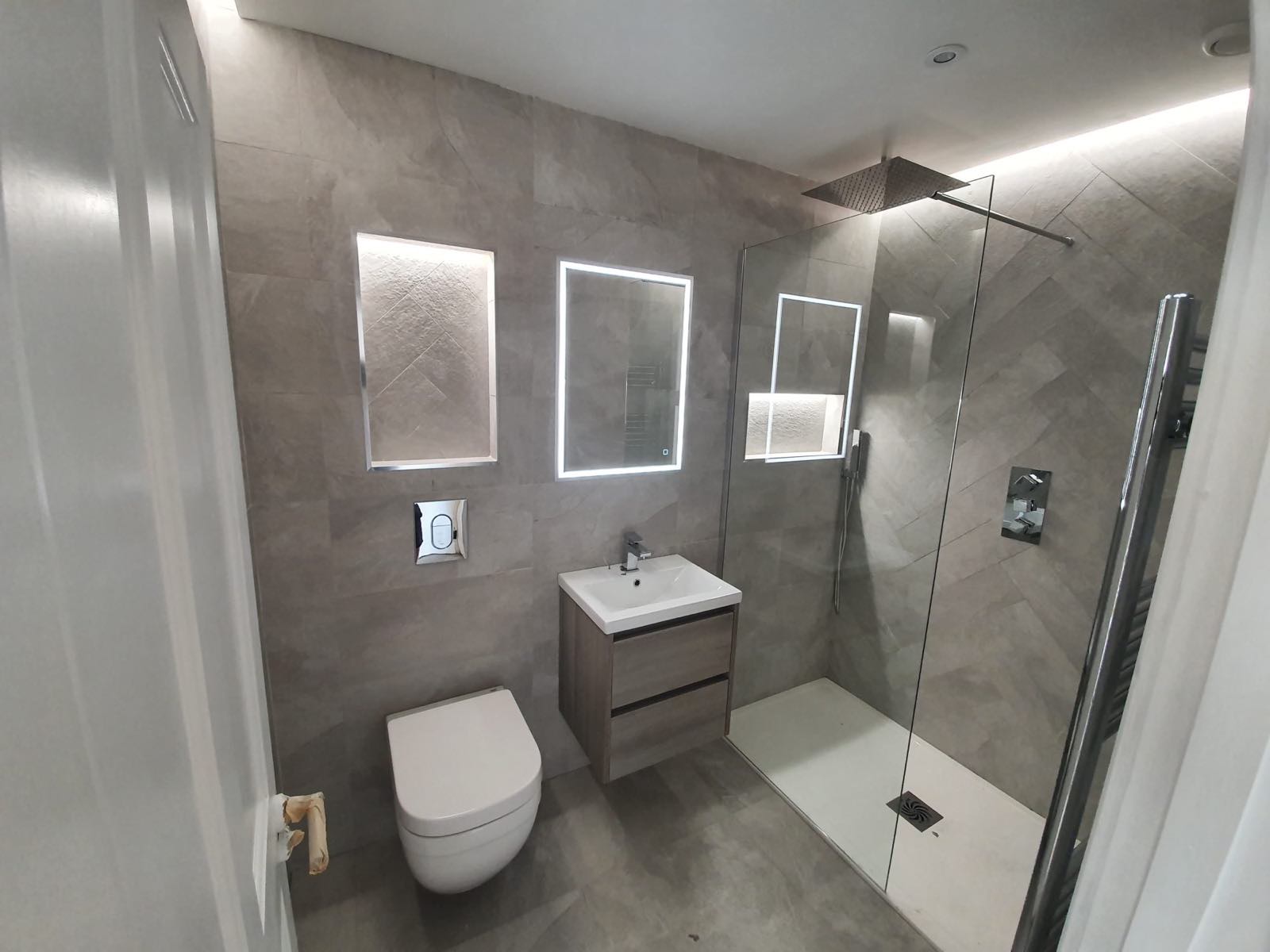
From a few hours for simple defined faults to several days for multi-stage making-good
Greater London
Written scope after photos/postcode review or visit
A useful first scope asks whether the tile has lost bond, the background has moved, water is entering through a junction or an isolated impact has damaged an otherwise sound area. That keeps the decision focused on the building condition, access and the work that can actually be priced, rather than a generic promise to solve every issue in one visit.
We describe repair-first options, realistic finish constraints and the points that need a separate specialist. This is practical editorial guidance, not a claim of a universal response time, fixed price, certification or named-project evidence.
The practical fault to describe
For tiling repairs, useful photos show cracked or loose tiles, hollow sounds, failed grout, split silicone, chipped edges, staining around a wet area and local tiles lifting after movement or moisture. Note when the symptom started, whether it changes after rain, water use or temperature changes, and whether another room is affected. A clear description lets us decide whether the next step is a defined repair, an inspection first, or immediate make-safe action.
Triage before a visible repair
The key question is whether the tile has lost bond, the background has moved, water is entering through a junction or an isolated impact has damaged an otherwise sound area. That question matters more than choosing a cosmetic product from a photograph. If a condition is active, the first scope may be to contain or investigate it; permanent making-good follows once the relevant cause is controlled.
What a defined scope can cover
A repair scope may remove failed local tiles where possible, prepare a stable background, refix compatible replacements, renew grout or silicone and make clear when wider waterproofing is needed. The written estimate should name the work edge, the access assumptions, the finish line and any dependencies outside the work. This keeps a local repair from quietly turning into an open-ended refurbishment.
Materials and existing fabric
The method depends on the material behind the visible fault. Common materials for this work include tiles matched as far as available, adhesive and grout selected for the substrate, movement-friendly sealant and appropriate backer-board repair where exposed. Existing London homes often contain older layers, altered details or discontinued finishes, so a site check can be needed before ordering a match.
Access and disruption
Before booking, tell us about spare tiles held at the property, room use during curing, flat access, dust and water protection, and whether the area is a shower or other constantly wet zone. These details affect labour, material handling and what protection is practical. In occupied homes, the workable sequence and clean-down matter as much as the repair itself.
Risks worth dealing with honestly
For this service, regrouting or resealing a moving, damp or hollow background can delay rather than solve the next failure. Where opening up reveals a different condition from the photos, the correct response is to explain the finding and agree a variation before extending the work. It is not to make an unsupported promise from a remote image.
Finish expectations
With tiling repairs, replacement tiles may differ in batch, shade or surface wear; a clean local repair is possible without pretending an old installation is factory-new. We state this before work so the repair and decoration allowance can be compared properly. A clear finish line is more useful than an artificial claim of an invisible result in every older room.
Questions to answer with an enquiry
Please include a wide view, close-ups, postcode, floor level, parking or loading notes, access restrictions and the history of the symptom. For tiling repairs, add whether relevant utilities or source work has already been checked. Those answers determine whether photos are enough for a provisional estimate.
What prevents repeat damage
After a repair, keep grout and silicone under review, avoid drilling without checking the substrate and address leaks before tiles become loose. Keep any scope, photographs and product information with the property record. That context helps a later trade understand what was repaired rather than repeating an earlier cosmetic-only treatment.
Clear boundaries
This page is for tiling repairs, not full wet-room waterproofing design, major plumbing changes and complete bathroom or kitchen refurbishment. If the job crosses a regulated or specialist boundary, we identify it early. A written repair scope should not imply qualifications, approvals or outcomes that have not been evidenced.
Working with related repairs
Tiling repairs often sits beside bathroom repairs, kitchen repairs, leak damage repair. The sequence matters: correct the source or background first, complete disruptive repairs, then make good and decorate. Booking the finish stage first can mean paying twice for the same area.
How to compare repair quotes
Compare the stated work, exclusions, materials, access assumptions and finish allowance rather than the headline total alone. For tiling repairs, a lower figure may omit preparation, a necessary return visit or the wider plane needed to make a local repair read consistently.
Problems we solve
- Visible or operational symptoms including cracked or loose tiles, hollow sounds, failed grout, split silicone, chipped edges, staining around a wet area and local tiles lifting after movement or moisture
- A repair brief that must establish whether the tile has lost bond, the background has moved, water is entering through a junction or an isolated impact has damaged an otherwise sound area
- Local works that can remove failed local tiles where possible, prepare a stable background, refix compatible replacements, renew grout or silicone and make clear when wider waterproofing is needed
- Occupied or managed-property access where spare tiles held at the property, room use during curing, flat access, dust and water protection, and whether the area is a shower or other constantly wet zone
- Making-good choices where replacement tiles may differ in batch, shade or surface wear; a clean local repair is possible without pretending an old installation is factory-new
- Repair planning alongside bathroom repairs, kitchen repairs, leak damage repair
Warning signs
- Symptoms such as cracked or loose tiles, hollow sounds, failed grout, split silicone, chipped edges, staining around a wet area and local tiles lifting after movement or moisture
- A condition that changes after the likely trigger
- Repeated cosmetic repair without cause control
- Any condition that creates an immediate safety concern
- Soft, loose or water-affected material that needs assessment before finishing
What is included
- Photo, postcode and access review for provisional scoping where practical
- A written estimate with inclusions, exclusions and assumptions
- Defined work that can remove failed local tiles where possible, prepare a stable background, refix compatible replacements, renew grout or silicone and make clear when wider waterproofing is needed
- Protection and tidy working appropriate to the agreed area
- Variation discussion before concealed or additional work proceeds
- Close-out notes on the agreed repair and any practical aftercare
What is not included
- full wet-room waterproofing design, major plumbing changes and complete bathroom or kitchen refurbishment
- Unverified guarantees, credentials or project claims
- Open-ended work outside the written scope
- Legal, insurance or deposit adjudication advice
- Concealed defects not visible when the original estimate was agreed
Guide prices
Guide ranges for Greater London orientation only. Not fixed quotes. Access, parking, materials, matching, property age and hidden defects change the written estimate.
Small tiling repairs & installation attendance
£120–£320Simple defined fault; access dependent
Half-day package
£280–£520Multiple related items
Larger making-good package
£450–£1,800Area and decoration dependent
Occupied multi-trade coordination day
£380–£750When sequenced with related repairs
Return fit after ordered parts
QuotedWhen materials are not same-day stock
What changes the price
- Access, parking and floor level
- Occupied versus void property
- Matching aged finishes versus full-plane redecoration
- Moisture status and drying needs
- Building management rules
- Material lead times
How the work runs
- 01Evidence
Provide clear images, timing and access notes. For this work, note cracked or loose tiles, hollow sounds, failed grout, split silicone, chipped edges, staining around a wet area and local tiles lifting after movement or moisture.
- 02Scope
We define what can be repaired and check whether the tile has lost bond, the background has moved, water is entering through a junction or an isolated impact has damaged an otherwise sound area.
- 03Repair
The agreed work may remove failed local tiles where possible, prepare a stable background, refix compatible replacements, renew grout or silicone and make clear when wider waterproofing is needed.
- 04Close-out
replacement tiles may differ in batch, shade or surface wear; a clean local repair is possible without pretending an old installation is factory-new. We record any practical next step.
Property types
- Victorian and Edwardian terraces
- Conversion flats and stacked stock
- Mansion-block apartments
- Ex-local-authority and mid-century blocks
- Newer apartments with management rules
- Rental and void properties
Materials and methods
- Materials are selected for the condition; typical examples include tiles matched as far as available, adhesive and grout selected for the substrate, movement-friendly sealant and appropriate backer-board repair where exposed.
- Failed material is dealt with to a sound, agreed work edge rather than hidden behind a cosmetic patch.
- Occupied areas receive protection and a controlled sequence appropriate to the scope.
- Finish work follows source control, preparation and any stated drying or cure requirements.
Aftercare
- keep grout and silicone under review, avoid drilling without checking the substrate and address leaks before tiles become loose
- Keep the written scope and any photographs with the property record.
- Report returning symptoms early rather than repeatedly covering them.
- Follow any stated drying, cure or usage guidance before heavy use.
Frequently asked questions
What should I send for a first assessment?
Send photos showing cracked or loose tiles, hollow sounds, failed grout, split silicone, chipped edges, staining around a wet area and local tiles lifting after movement or moisture, plus a postcode, access notes and a short timeline. Include related areas where they help explain the fault.
Can you quote from photographs?
Clear photos can support a provisional scope. If whether the tile has lost bond, the background has moved, water is entering through a junction or an isolated impact has damaged an otherwise sound area, an inspection or separate investigation may be needed before a permanent price is sensible.
What does the repair scope include?
The scope can remove failed local tiles where possible, prepare a stable background, refix compatible replacements, renew grout or silicone and make clear when wider waterproofing is needed. It states inclusions, exclusions and assumptions before work proceeds.
What materials are used?
Materials are selected for the existing condition. Examples may include tiles matched as far as available, adhesive and grout selected for the substrate, movement-friendly sealant and appropriate backer-board repair where exposed, subject to inspection and availability.
Will the repair be invisible?
replacement tiles may differ in batch, shade or surface wear; a clean local repair is possible without pretending an old installation is factory-new. The estimate should say whether local making-good or wider decoration is included.
What access information matters?
Please confirm spare tiles held at the property, room use during curing, flat access, dust and water protection, and whether the area is a shower or other constantly wet zone. This prevents an estimate from omitting real site constraints.
What if more damage is found?
We explain the finding and agree a written variation before proceeding beyond the original scope.
How can repeat damage be reduced?
keep grout and silicone under review, avoid drilling without checking the substrate and address leaks before tiles become loose. This is practical maintenance, not a claim of a permanent cure without diagnosis.
What is outside this service?
This service excludes full wet-room waterproofing design, major plumbing changes and complete bathroom or kitchen refurbishment. Appropriate specialists are needed where those boundaries apply.
Which related repairs may be needed?
Depending on the condition, the work can sit alongside bathroom repairs, kitchen repairs, leak damage repair. The order is agreed in the scope.
Next step
Need tiling repairs & installation?
Share photos and your postcode. We will confirm fit, access and a written estimate.